


Market Momentum | October 2026 | Sherlock Wealth
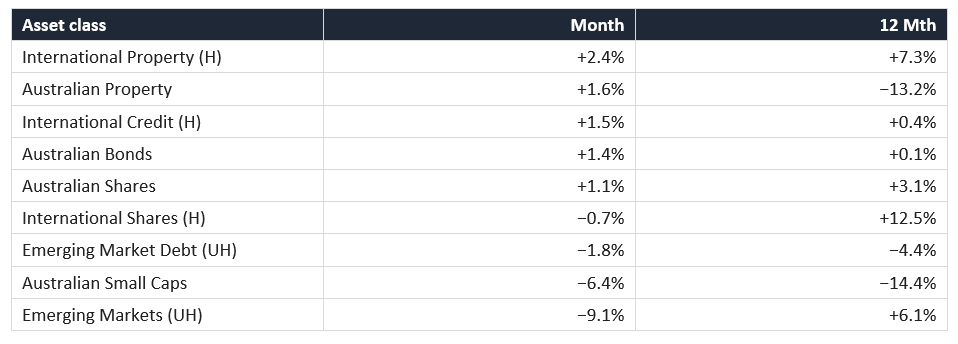
Investorsreassessed the AI investment cycle in October. Technology shares fell afterresults from Alphabet and Meta, and emerging markets fell 9.1%, their largestmonthly decline in years. Bond yields fell and bonds rallied, while Australianshares rose 1.1% on gains in utilities and banks.
How asset classes performed
What happened
Australia
Australian shares rose 1.1% in October, led by defensive sectors. Utilities rose 9.0% andfinancials 6.8% as lower bond yields made dividend-paying shares moreattractive. Materials fell 8.1% on weaker metals prices and softer Chinesesteel demand, which weighed on the major miners. Small caps fell 6.4%.
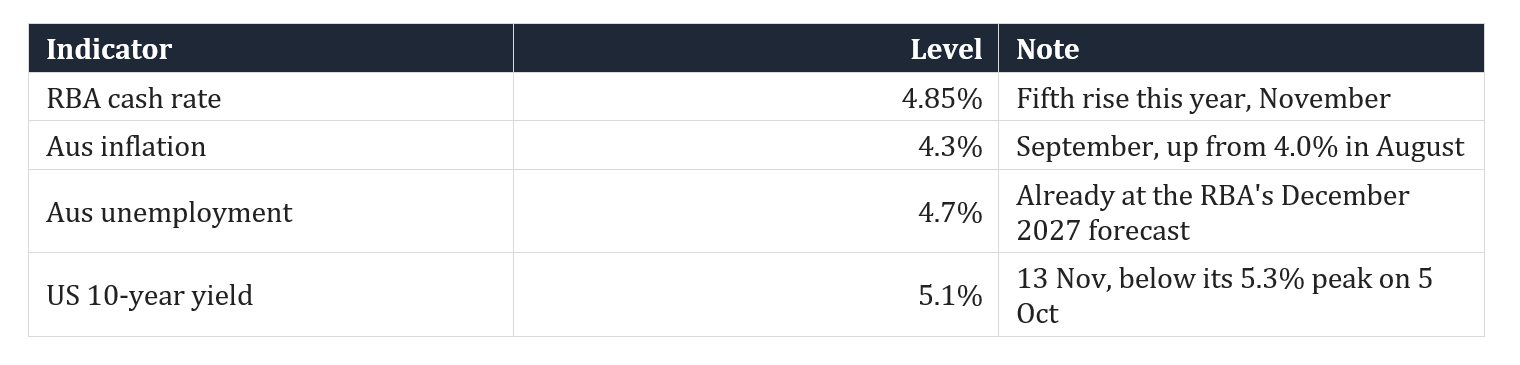
Inflationrose to 4.3% in September from 4.0% in August, mainly on energy prices.Unemployment rose to 4.7% as employment fell by 39,300 jobs, againstexpectations of 20,000 new jobs. That is the level the RBA had forecast forDecember 2027.
Theeconomy is losing momentum. The services PMI fell to 47.8 from 51.9, signallingcontraction, and business confidence fell to -13. Government bonds rose 1.4% asyields fell, and listed property rose 1.6%, although it is still 13.2% lowerover 12 months.
Global
Hedged global shares fell 0.7%, a second weak month. Technology fell 6.9% afterAlphabet disappointed on earnings and Meta flagged higher spending alongsidenegative cash flow. Energy rose 12.5% as Brent climbed above US$110 a barrel,and European shares held up better on their tilt to defensive sectors.
Emergingmarkets fell 9.1%, led by Taiwan and South Korea, and China's CSI 300 had itsworst month since January 2016. Lower yields lifted bonds: global governmentbonds rose 1.7% and credit 1.5%, although credit spreads widened from tightlevels. Global infrastructure rose 7.7% and listed property 2.4%.
TheFed, the ECB and the Bank of Japan held rates, while the Bank of Canada raisedby 0.25%. US inflation rose to 3.7%, and a 9.1% jump in petrol prices accountedfor more than half of the monthly rise. China's economy grew 4.5% in theSeptember quarter, above market forecasts.
How we see it
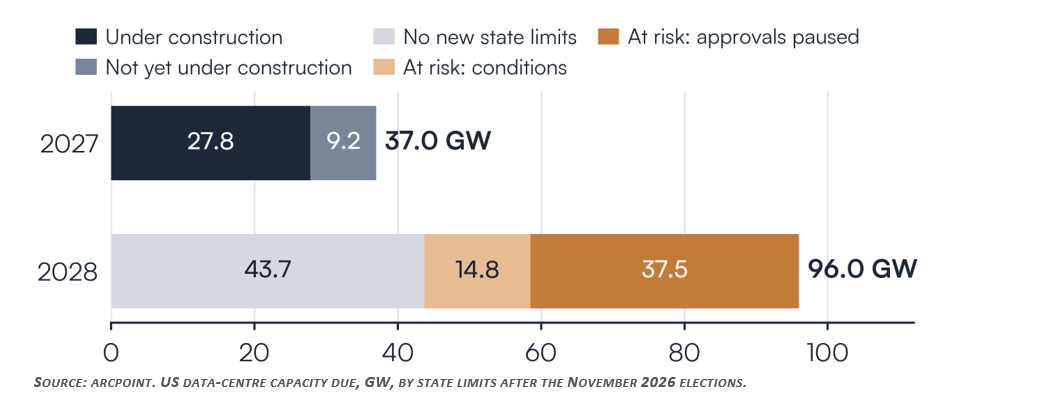
The US midterms gave Democrats both houses of Congress, but not the power toreverse policy: the President keeps his veto and most Senate bills still need60 votes. The more important result came from the states, where voters approvedmore than 30 local measures limiting data centre construction.
Capacitydue in 2027 is largely committed, with about 75% of the 37 GW already underconstruction. The risk sits in 2028 and beyond, and much of it is in Texas,which accounts for roughly 41% of new capacity slated for 2028 and elected agovernor who campaigned on a moratorium. Some of that capacity will moveelsewhere, and tighter local rules favour hyperscalers and developers that canfund their own power.
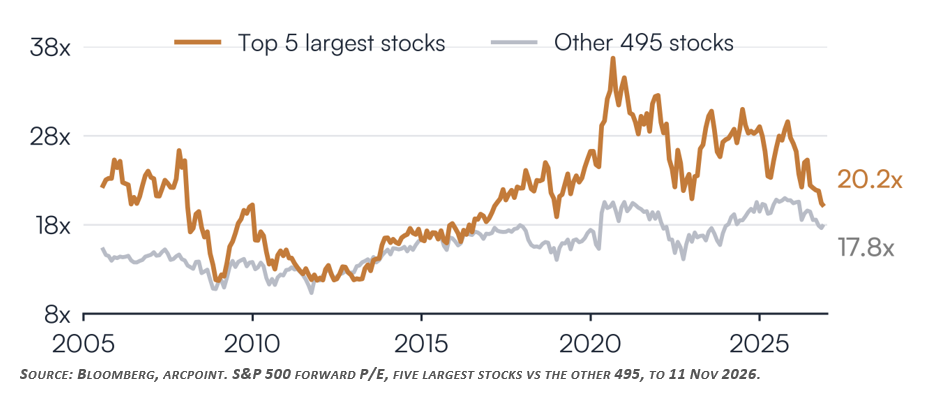
UScompany earnings for the September quarter were about 30% higher than a yearearlier, but beat forecasts by only 2.7%, the smallest margin since late 2022.The five largest US companies now trade on 20.2x forward earnings against 17.8xfor the other 495. With less room for valuations to rise, returns depend onearnings beating expectations while rates remain elevated.
The Point: TheAI investment cycle remains intact, but the hurdle has risen, so we expectlarger and more frequent drawdowns and a wider gap between companies that earna return on AI investment and those that do not.
Charts of the month
Thetop five US stocks' valuation premium has narrowed
37.5GW of data-centre capacity due in 2028 faces paused approvals
What we are watching
- Australian jobs and inflation (19 and 25 November). The RBA raised the cash rate to 4.85% in November, its fifth rise this year. With house prices falling at their fastest pace in more than four decades, the bar for further rises is getting higher.
- Oil. Oil fell more than 8%after the election on hopes of de-escalation with Iran, but reserves remaindepleted and diesel tight. A lasting fall in energy prices is the preconditionfor interest rates ending 2027 lower.
- US data centre construction. Grid access and planning approvals are the constraint,and support for moratoriums is growing in both parties. Will the Democrat sweepof Congress slow construction of the computing capacity that AI earnings growthdepends on?